
Weekly Report 06/2026
Dollar falls to record low
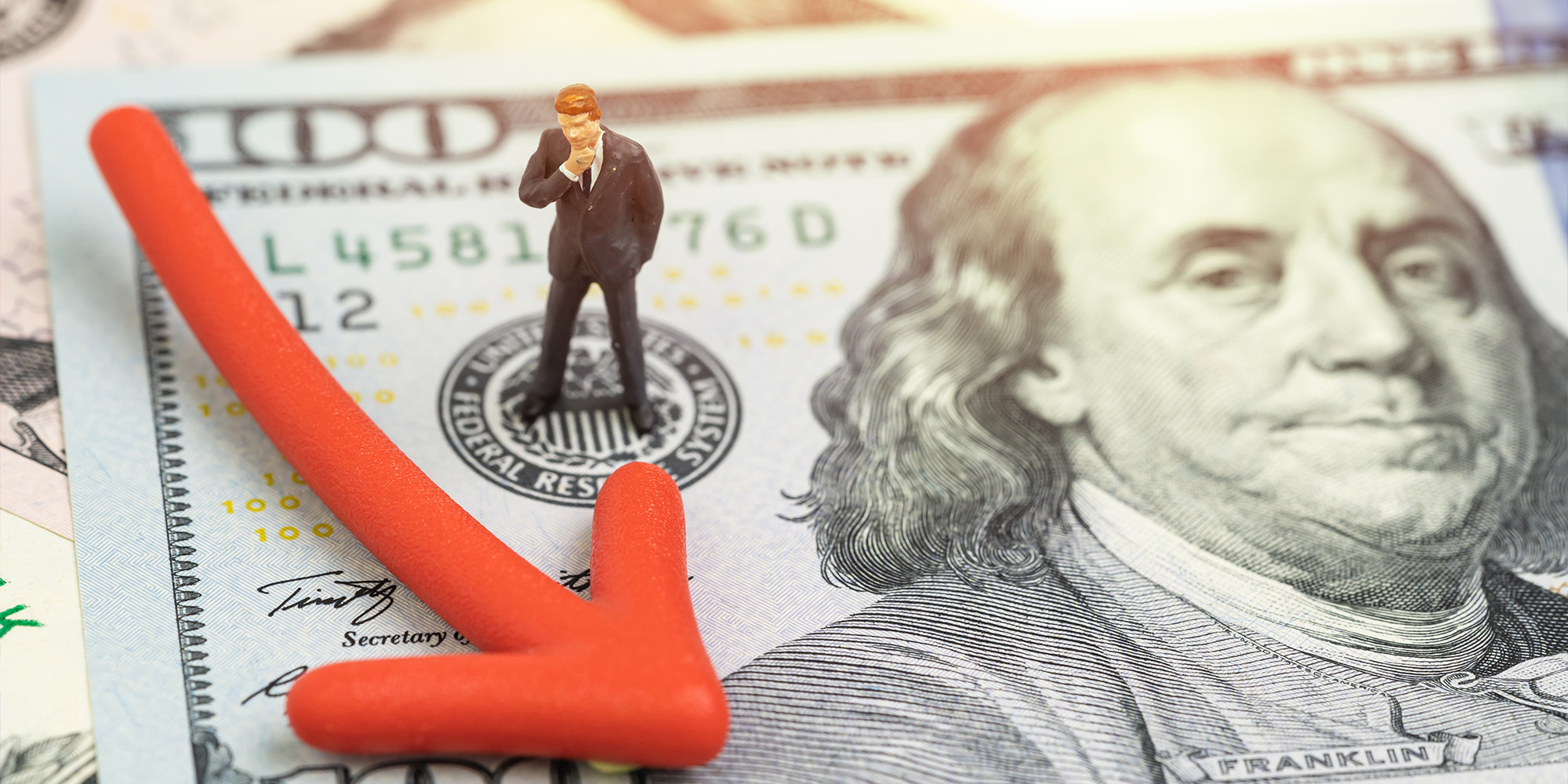
US President Donald Trump sent the dollar into a tailspin and helped the Swiss franc soar in return. It climbed to its highest level in ten years. The dollar, on the other hand, fell to a record low of 0.76 francs: an 82% loss in value since 1970, more than 3.0% annually. The trigger was a remark Trump made to a journalist. “The dollar is doing great,” Trump said when asked if the dollar had fallen too much.
The distorted perception and surprisingly weak US consumer confidence triggered a wave of selling on Tuesday. Consumer confidence fell to a 12-year low. The dollar recovered slightly following the nomination of Kevin Warsh. It is now only 2.5% lower than at the beginning of the year. Since Donald Trump took office, the dollar has lost more than 17%.
Last week, the US Federal Reserve kept its key interest rate steady in the range of 3.50% to 3.75%. Jerome Powell’s term as chairman will end in a few months, and his successor is one of his harshest critics. The Fed’s problem is that it relies on outdated economic models and uses them to make poor economic and inflation forecasts. However, political uncertainty in the US has also increased due to constantly changing tariffs. These are interpreted unclearly by the Fed, which is another reason why companies and private households continue to worry about persistently high inflation.
In our portfolio, the results from the pharmaceutical and diagnostics group Roche were encouraging. Core earnings (+11%) rose solidly. Pharmaceutical supplier Lonza is also doing well. Sales growth (+21.7%) was strong, as was the higher margin.
Givaudan also reported good annual figures, achieving free cash flow of 14.1% of sales. In 2022, this figure was 6.7%. Swisscom shares (+10% since the beginning of the year) provided an upswing, climbing to a 25-year high. The telecommunications group announced its most extensive price increase in many years.
However, this did not prevent the Swiss Market Index from falling. Heavily influenced by Nestlé (-6%) and weak insurance stocks (profit-taking), it was 0.6% lower at the end of the month than at the beginning of the year, below the global stock index (+0.2% in CHF).
Incidentally, ABB’s order books performed excellently, which is why its shares are at the top of the SMI (+13% since the beginning of the year). This also led to positive sentiment towards other companies heavily involved in the construction of data centers, including Siemens (+7%) and Belimo (+8%). In contrast, Europe’s largest software group, SAP (-18%), was punished. After growth of 29% (2024), the cloud business grew by “only” 26% (2025) – with rising market shares. We therefore consider the reaction on the capital markets to be exaggerated.
Topic of the week: Tech giants in competition
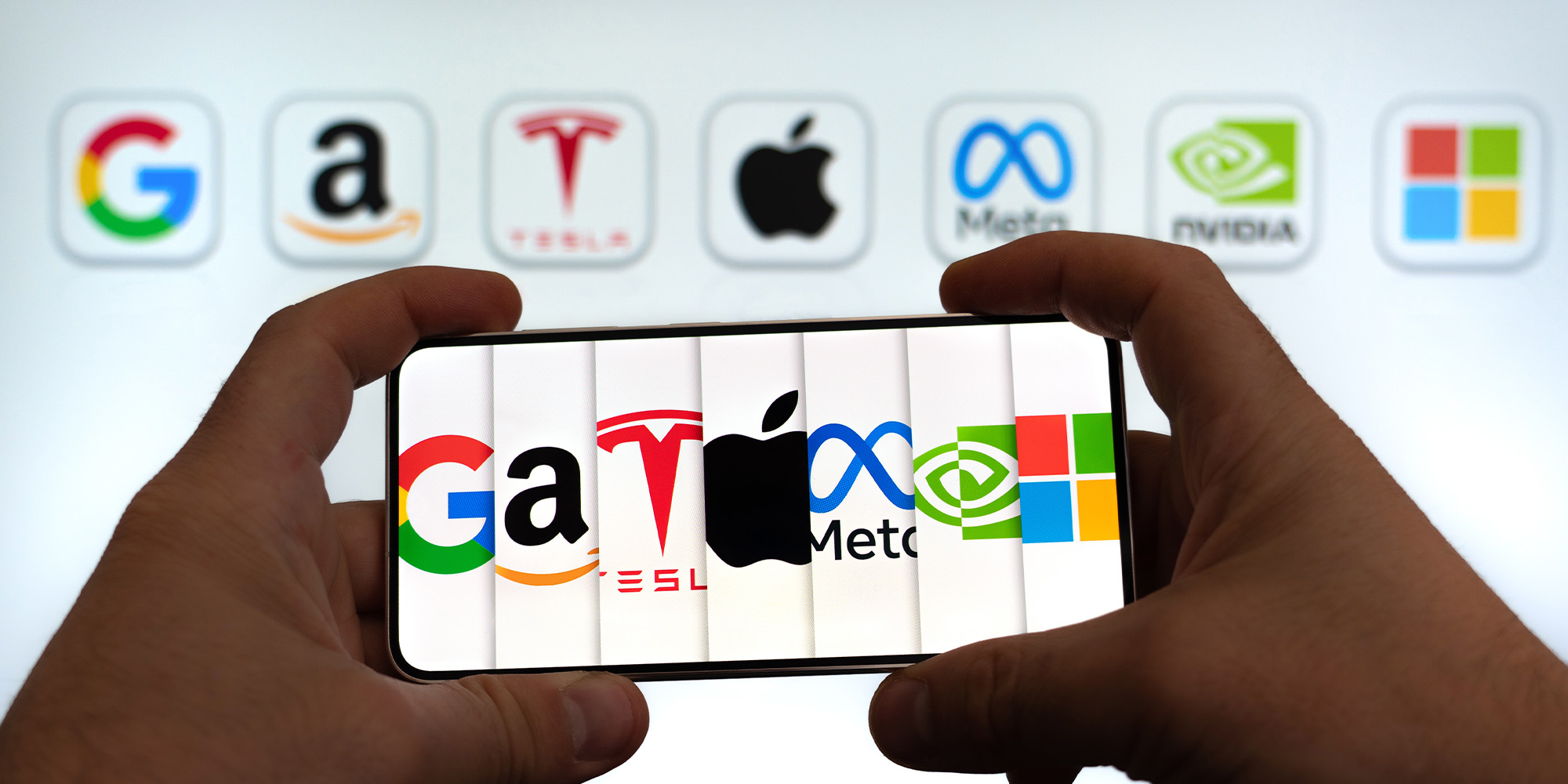
The eagerly awaited figures from major US tech companies were mixed. While Microsoft (-11% since the beginning of the year in USD) and Apple (-5%) shares are down, Google (+8%), Amazon (+4%) and Nvidia (+2%) shares are up. As it becomes increasingly clear that Microsoft will not achieve a high return on its massive investments in AI, the company was quickly revalued by USD 350 billion to a level more in line with its historical fair value.
The sales success of the iPhone 17 and the recovery of its important Chinese business helped Apple achieve surprisingly strong growth. Revenue from smartphone sales alone rose to a record high of $85.3 billion (+23%). “Demand for the iPhone was breathtaking,” said CEO Tim Cook. However, Apple entered into a partnership with Google on the subject of AI. Progress on these initiatives is slow.
The tech giants are currently outbidding each other with billion-dollar investments in data centers and AI solutions, but the intermediate steps and concerns about the timely monetization of the investments are being received differently. Microsoft’s figures were a mood killer.
Google is the technological leader with its AI service Gemini, and certainly in terms of revenue, but competitors such as OpenAI and Anthropic (Amazon and Google are the two main investors) are hot on its heels. Several technology companies are apparently in talks about a major financing round for the AI company OpenAI, which is not in a good financial position. The investments involved are in the range of $40 to $60 billion.
Investors are said to include Microsoft and Amazon, but with different interests. Microsoft wants to catch up with Google, and Amazon wants to push ahead with its own chip development. This is probably why OpenAI is set to hold initial talks with Amazon about financing of at least $10 billion. In return, the company wants to use Amazon chips. This, in turn, angered Nvidia, which originally wanted to participate in the financing.
This could be a strong incentive for Amazon, as the company would expand its position in the AI industry and compete more strongly with Nvidia. In addition, it is already known that Amazon will provide OpenAI with $38 billion worth of cloud computing power over the next seven years (which Nvidia cannot afford).
The most important data points in the new week
| February 2, 2026 | USA: ISM Manufacturing Index January |
| February 4, 2026 | Eurozone, USA: HICP (core) inflation; ISM Services Index January |
| February 5, 2026 | USA: January unemployment claims |
| February 6, 2026 | USA: Hourly wages, other labor market data for January |
Information
Tax statements 2026
We would like to take this opportunity to inform you that the preparation of tax documents for the year 2025 will probably take until March again.
This is not due to us, but to the custodian banks. They usually wait for the final price list from the FTA, which is typically published in the second half of February.
The fact that the documents are prepared so late is therefore not a sign of poor service; it is due to the fact that the banks are waiting for the final and correct prices.
In the case of funds in particular, these are often not available to the FTA until February from the fund companies. Sending them out earlier would therefore mean that the statement would be incorrect.
Thanks for your understanding.
Your Zugerberg Finanz
Information event for private individuals – Lecture language Swiss German
On Thursday, February 19, 2026, we will be holding an information event for private individuals at the Lüssihof. This event is primarily aimed at those who are interested in getting to know us better.
Register
(Event in Swiss German language)
Market data
| Stock markets | since 31/12/2025 | ||
|---|---|---|---|
| SMI | 13'188.3 | –0.6% | |
| SPI | 18'220.4 | +0.0% | |
| DAX € | 24'538.8 | +0.2% | |
| Euro Stoxx 50 € | 5'947.8 | +2.7% | |
| S&P 500 $ | 6'939.0 | +1.4% | |
| Dow Jones $ | 48'892.5 | +1.7% | |
| Nasdaq $ | 23'461.8 | +0.9% | |
| MSCI EM $ | 1'528.1 | +8.8% | |
| MSCI World $ | 4'527.6 | +2.2% | |
| Bond markets | since 31/12/2025 | ||
|---|---|---|---|
| SBI Dom Gov TR | 224.8 | +0.8% | |
| SBI Dom Non-Gov TR | 122.3 | +0.7% | |
| Real estate markets | since 31/12/2025 | ||
|---|---|---|---|
| SXI RE Funds | 605.9 | +0.8% | |
| SXI RE Shares | 4'833.8 | +6.9% | |
| Commodities | since 31/12/2025 | ||
|---|---|---|---|
| Oil (WTI; $/Bbl.) | 65.2 | +13.6% | |
| Gold (CHF/kg) | 121'631.3 | +10.5% | |
| Bitcoin (USD) | 84'162.4 | –4.0% | |
| Currencies | since 31/12/2025 | ||
|---|---|---|---|
| EUR/CHF | 0.9163 | –1.5% | |
| USD/CHF | 0.7730 | –2.5% | |
| EUR/USD | 1.1851 | +0.9% | |
| Short-term interest rates | |||
|---|---|---|---|
| 3-m | 3-m. fcst. | 12-m. fcst. | |
| CHF | -0.07% | -0.1%–0.0% | -0.1%–0.0% |
| EUR | 2.03% | 1.9%–2.1% | 1.7%–1.9% |
| USD | 3.66% | 3.4%–3.6% | 3.0%–3.3% |
| Long-term interest rates | |||
|---|---|---|---|
| 10-years | 3-m. fcst. | 12-m. fcst. | |
| CHF | 0.23% | 0.2%–0.5% | 0.4%–0.7% |
| EUR | 2.82% | 2.8%–3.0% | 2.5%–2.8% |
| USD | 4.24% | 4.1%–4.4% | 3.7%–4.0% |
| Inflation | |||
|---|---|---|---|
| 2025 | 2026P | 2027P | |
| Schweiz | 0.1% | 0.3% | 0.5% |
| Euroraum | 2.2% | 1.8% | 1.8% |
| USA | 3.0% | 2.5% | 2.0% |
| Economy (real GDP) | |||
|---|---|---|---|
| 2025 | 2026P | 2027P | |
| Switzerland | 1.2% | 1.3% | 1.5% |
| Eurozone | 1.4% | 1.4% | 1.7% |
| USA | 2.3% | 2.2% | 2.0% |
| Global | 3.0% | 3.0% | 3.0% |