
Weekly Report 16/2026
Risks to Price Stability
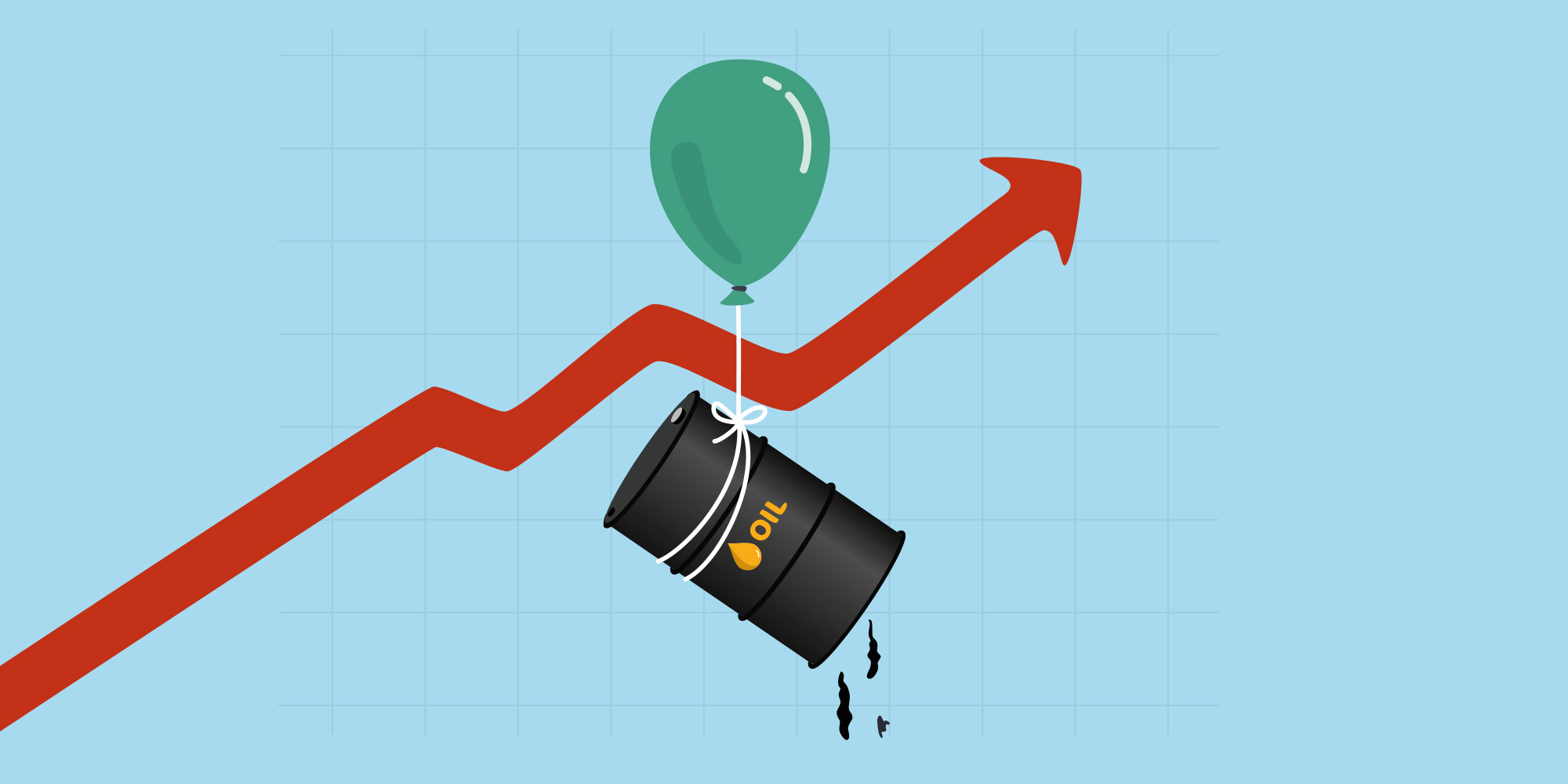
There are risks to medium-term price stability due to the rise in oil and gas prices in recent weeks. If inflationary pressures persist for a long time, they could also at least moderately hamper global economic growth should second-round effects materialize. As long as artificial shortages keep energy prices high, increased logistics costs will also drive up the prices of other goods and services. Consequently, less of disposable household income remains for consumption.
If there is no end in sight to an extraordinary situation, this can lead to a structural shift in consumer behavior. Declining consumer sentiment figures signal increasing caution among consumers in recent weeks. The main risk to price stability and global economic development remains the closure of the Strait of Hormuz, which is disrupting supply chains for oil, liquefied natural gas, diesel, kerosene, fertilizer, and helium and affecting global market prices.
Risks of escalation are always difficult to assess, as is the transition from a temporary ceasefire brought about by negotiations to stable, lasting conditions. It also remains unclear how long it will take for traffic through the strait to return to normal. The price of a barrel of crude oil for immediate delivery has recently fallen to $95, but the Strait of Hormuz cannot simply be opened at the push of a button. We remain far away from normal in the energy markets.
Ship traffic through the Suez Canal never fully recovered from the severe disruptions caused by the attacks by the Yemeni Houthi militia. It now stands at only half its 2023 level. In the Strait of Hormuz, however, this is not a realistic prospect. Both China and the U.S. want to restore full, safe, and toll-free shipping as quickly as possible, as stipulated in the 1982 United Nations Convention on the Law of the Sea.
As an individual investor, it is important to remember a comforting principle: geopolitical turbulence does not destroy value. Depending on the risk appetite of the investor community, they may cause temporary declines in stock and bond prices, but this can just as quickly reverse if the news situation changes. Because there are numerous conflicting parties in the Middle East with differing objectives, finding a robust solution to the conflict remains difficult.
The shaky ceasefire pushed the Swiss Market Index to 13’183 points last week (+1.5% compared to the previous week). However, like other prominent stock indices (Dow Jones, Nasdaq, S&P 500), the SMI has remained slightly in negative territory since the start of the year. This also applies to bond indices (e.g., Swiss Bond Index, Global Aggregate Index).
Further bottlenecks in the energy and commodities markets, as well as disruptions in supply chains, remain a risk. For our investments, however, we forecast improved prospects over the course of the second quarter and noticeable price gains by the end of the year.
Topic of the week: AI, Cybersecurity, and the Stock Market Rally

The world, which is increasingly permeated by artificial intelligence (AI), is changing rapidly. So rapidly, in fact, that the U.S. Treasury Secretary and the Chair of the Federal Reserve summoned leading Wall Street executives to Washington on short notice. Companies such as Apple, Amazon, Microsoft, Google, Nvidia, and Cisco, as well as systemically important banks like JP Morgan and Goldman Sachs, were urged to better fortify their IT systems against AI. This is because the latest AI solutions boast a level of performance that every hacker dreams of.
Anthropic’s AI model, Claude Mythos, has already found thousands of serious vulnerabilities, including in every popular operating system and web browser. Through penetration tests, Claude Mythos uncovered gaps that had gone undetected for decades by both IT security professionals and hackers.
Companies need to become much more agile in the IT sector. They must close vulnerabilities just as quickly as AI finds them. We can no longer afford lengthy processes with penetration tests only every six months.
Currently, it is not the buyers of data centers and chips—such as Microsoft and Alphabet / Google—who are benefiting most from the AI wave, but rather the manufacturers of the key components: for example, memory chips needed to train and deploy large language models. The Korean manufacturers Samsung and SK Hynix are the global market leaders in high-performance memory systems, which go hand in hand with the AI processors from Taiwan’s TSMC.
The latest quarterly results from TSMC, Samsung, and SK Hynix were a pleasant surprise. Due to high demand for their chips, they are able to implement massive price increases. Factories in Taiwan and Korea have been operating at full capacity for months. In the U.S., however, there is a shortage of specialized ASML machines and highly qualified employees to carry out domestic manufacturing.
Since these are also the three largest stocks in the MSCI Emerging Markets Index, the index regained momentum last week. The stock market rally centered on AI solution providers continues for now, while traditional software providers such as Microsoft, SAP, Salesforce, Adobe, etc., remain under pressure.
The most important data points in the new week
| April 14, 2026 | U.S.: NFIB Small Business Optimism Index (March) |
| April 15, 2026 | India: March Trade Balance |
| April 16, 2026 | China: Q1 GDP, March Retail Sales, and Industrial Production |
| April 17, 2026 | Eurozone: Latest trade and current account figures |
Events
Information event for private individuals – presentation in Swiss German – Investing is also a matter of trust
On Thursday, 30 April 2026, we will be hosting an information session for private individuals at the Lüssihof. This event is primarily aimed at those who are interested in getting to know us better.
To registration (event in Swiss German)
Zugerberg Finanz KidsDay – May 2026
On Wednesday, 27 May 2026, the next Zugerberg Finanz KidsDay will take place in Baar in collaboration with MORE Sports. Children aged 6 to 12 can register for this fun afternoon of football.
The venue is the Lättich sports complex in Baar. The football will take place between 1.00 pm and 5.00 pm.
All children will receive a starter pack containing a football shirt and other extras. Drinks and healthy snacks will be available to them as much as they like.
Zugerberg Finance Economic and Stock Market Outlook – June 2026
The next Zugerberg Finance Economic and Stock Market Outlook will take place on Tuesday, 16 June 2026 at the Theater Casino in Zug and on Thursday, 18 June 2026 at the KKL in Lucerne.
Please make a note of the dates. The programme and registration details will be available at a later date via the events section of our website (event in Swiss German).
Market data
| Stock markets | since 31/12/2025 | ||
|---|---|---|---|
| SMI | 13'183.3 | –0.6% | |
| SPI | 18'489.7 | +1.5% | |
| DAX € | 23'804.0 | –2.8% | |
| Euro Stoxx 50 € | 5'926.1 | +2.3% | |
| S&P 500 $ | 6'816.9 | –0.4% | |
| Dow Jones $ | 47'916.6 | –0.3% | |
| Nasdaq $ | 22'902.9 | –1.5% | |
| MSCI EM $ | 1'547.5 | +10.2% | |
| MSCI World $ | 4'474.0 | +1.0% | |
| Bond markets | since 31/12/2025 | ||
|---|---|---|---|
| SBI Dom Gov TR | 219.8 | –1.5% | |
| SBI Dom Non-Gov TR | 121.4 | –0.1% | |
| Real estate markets | since 31/12/2025 | ||
|---|---|---|---|
| SXI RE Funds | 603.4 | +0.4% | |
| SXI RE Shares | 5'049.6 | +11.7% | |
| Commodities | since 31/12/2025 | ||
|---|---|---|---|
| Oil (WTI; $/Bbl.) | 96.6 | +68.2% | |
| Gold (CHF/kg) | 120'438.0 | +9.4% | |
| Bitcoin (USD) | 73'388.3 | –16.3% | |
| Currencies | since 31/12/2025 | ||
|---|---|---|---|
| EUR/CHF | 0.9247 | –0.7% | |
| USD/CHF | 0.7887 | –0.5% | |
| EUR/USD | 1.1723 | –0.2% | |
| Short-term interest rates | |||
|---|---|---|---|
| 3-m | 3-m. fcst. | 12-m. fcst. | |
| CHF | -0.05% | -0.1%–0.0% | -0.1%–0.0% |
| EUR | 2.20% | 1.9%–2.1% | 1.7%–1.9% |
| USD | 3.67% | 3.4%–3.6% | 3.0%–3.3% |
| Long-term interest rates | |||
|---|---|---|---|
| 10-years | 3-m. fcst. | 12-m. fcst. | |
| CHF | 0.45% | 0.2%–0.5% | 0.4%–0.7% |
| EUR | 3.03% | 2.8%–3.0% | 2.5%–2.8% |
| USD | 4.32% | 4.1%–4.4% | 3.7%–4.0% |
| Inflation | |||
|---|---|---|---|
| 2025 | 2026P | 2027P | |
| Schweiz | 0.1% | 0.3% | 0.5% |
| Euroraum | 2.2% | 1.8% | 1.8% |
| USA | 3.0% | 2.5% | 2.0% |
| Economy (real GDP) | |||
|---|---|---|---|
| 2025 | 2026P | 2027P | |
| Switzerland | 1.2% | 1.3% | 1.5% |
| Eurozone | 1.4% | 1.4% | 1.7% |
| USA | 2.3% | 2.2% | 2.0% |
| Global | 3.0% | 3.0% | 3.0% |