
Weekly Report 11/2026
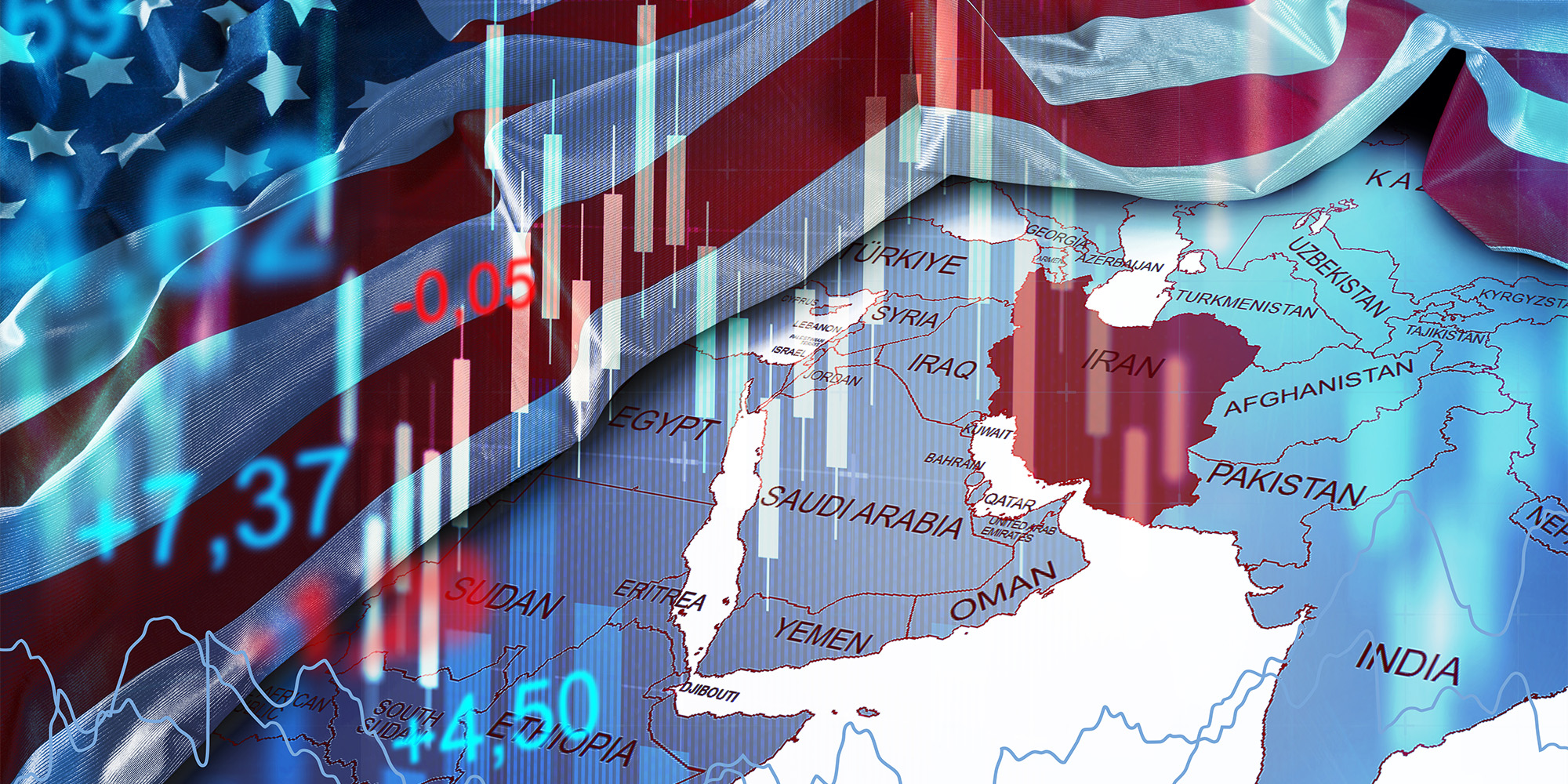
Increased volatility due to the war in Iran
Last week took its toll on the stock and bond markets. In the short term, speculation rose that the Strait of Hormuz would remain blocked for a long time due to the war in the Middle East. This drove oil and gas prices up sharply on speculative grounds. On Monday, the price explosion continued.
Nevertheless, the oil price shocks are no longer comparable to those of the past. Despite rising energy prices, the economic consequences of the Iran war appear to be limited. The shift in GDP generation from the industrial to the service sector has greatly reduced energy dependence per GDP unit. And with more and more renewable energy sources, the mix has changed. Finally, one more thing: the US is the world’s largest oil and gas producer with a growing share of exports. It is not inconvenient for the US to show Qatar in the liquefied gas sector that it is currently 100% capable of delivering and is also entering into new long-term supply contracts. All LNG from Qatar must pass through the Strait of Hormuz.
In essence, our macroeconomic baseline scenario is proving resilient to events in the Middle East. The risk of a global economic crisis remains low, which is why we continue to focus on a constructive market environment and remain confident about equities even in these turbulent trading days.
The capital markets in Europe got off to a good start in the new year, while some indices in the US and the dollar declined. Last week and at the beginning of this week, the picture reversed. The dollar gained slightly and the US stock markets showed remarkable resilience, while the markets in Europe slipped significantly. The SMI was no exception.
Within a week, the SMI fell from around 14,000 to 13,095 points (-6.6% last week). The Dow Jones (-3.0%) and S&P 500 (-2.0%) fared better because technology stocks did not change significantly. Taking the beginning of the year as a starting point, everything remains within the normal range of market fluctuations. The SMI is lower than at the beginning of the year (-1.3%), while the global stock index (-2.0% in CHF) has seen a more pronounced decline. The US technology index Nasdaq (-5.7% in CHF ytd) and the recently stronger dollar (-2.1% ytd) left their mark. The war in Iran weakened the euro to 0.90 (-3.1% ytd).
The higher volatility caused by oil prices rose to 34 as measured by the VIX: this is the highest level since Donald Trump’s Rose Garden event in April 2025. However, this should not be cause for concern – on the contrary. In the past, a high VIX value has always proven to be a reliable time to patiently invest excess liquidity.
According to the textbook, bond prices should rise when stock markets fall, but not when rising energy prices raise fears of a new wave of inflation. The Swiss Bond Index fell (-1.1% in five trading days), while the global bond index (-1.8%) saw a much more pronounced decline, which is likely to continue.
Topic of the week: More than $100 Dollar per barrel

With the Israeli-American attacks on Iran, the markets braced themselves for lasting macroeconomic and inflationary shocks. If this had been a short-lived conflict, speculation would not have skyrocketed to such an extent. Available natural gas jumped by around 60%, and crude oil prices rose by around 29% compared to the previous week. In fact, traffic in the extremely important Strait of Hormuz has almost come to a standstill, but lasting supply bottlenecks are not expected. Storage capacities in the Gulf are almost exhausted.
Donald Trump announced an escort by the US Navy and transit insurance. Rapid implementation is crucial, as any delay carries the risk of oil prices rising to USD 100 to 120 per barrel (159 l). On Monday, the price of oil shot up to just under USD 120 and fell to USD 103 by 9 a.m. (CET). This in turn changed the direction of the capital markets: risk appetite for equities, particularly in Europe, Japan and emerging markets, and for emerging market bonds declined significantly on Monday morning. In times of increasing geopolitical uncertainty, the dollar and the Swiss franc are confirming their status as safe havens.
The headlines therefore cause us to remain cautious. Of course, there are also political catalysts for de-escalation in the Middle East, even if the risk of further escalation remains in the short term. However, we expect the conflict to last a few weeks and have only a limited impact on the general growth and inflation outlook.
However, Donald Trump is also under pressure at home. The fundamentals are still reasonable, but airfares are rising rapidly and the average price of a gallon of gasoline has risen to over $3.30. This is a lot for the average US citizen and, alongside food prices, is the most important indicator of inflation. The war threatens to prevent interest rates from being lowered due to fears of inflation. This would be contrary to the US president’s economic goals, which is why he is certainly also looking at strategic oil reserves. The US has by far the largest reserves in the world, stored in gigantic salt caverns in Texas and Louisiana.
The most important data points in the new week
| March 9, 2026 | USA: New York Fed Survey of Consumer Expectations February |
| March 10, 2026 | USA: NFIB Small Business Optimism February |
| March 11, 2026 | Germany: HICP Core Inflation and Inflation February |
| March 13, 2026 | USA: Income, Orders, University of Michigan Consumer Sentiment March |
Information
Tax statements 2026
We are pleased to announce that the asset and tax statements for all mandates and custodian banks are now available on the mobile app.
Asset statements
· Zugerberg Finanz Revo (Bank Zweiplus)
· Zugerberg Finanz Revo (Swissquote)
· Zugerberg Finanz 3a Revo
· Zugerberg Vested Benefits Foundation
· Vested Benefits Foundation Wildspitz
Tax statements
· Zugerberg Finanz R (Zuger KB)
· Zugerberg Finanz R (UBS)
· Zugerberg Finanz R (CS)
· Zugerberg Finanz R (Bank Julius Bär)
· Zugerberg Finanz Revo (Swissquote)
· Zugerberg Finanz 3a Revo
Accountability statements
· Zugerberg Finanz R (Zuger KB)
· Zugerberg Finanz R (UBS)
· Zugerberg Finanz R (CS)
· Zugerberg Finanz R (Bank Julius Bär)
Information event for private individuals – presentation in English – Longevity & Financial Markets Outlook 2026
On Thursday, 19 March 2026, we will be hosting an information event for private individuals at Lüssihof. This event is primarily aimed at those who are interested in getting to know us better.
Further information and registration details can be found on our website:
Market data
| Stock markets | since 31/12/2025 | ||
|---|---|---|---|
| SMI | 13'095.6 | –1.3% | |
| SPI | 18'099.8 | –0.7% | |
| DAX € | 23'591.0 | –3.7% | |
| Euro Stoxx 50 € | 5'719.9 | –1.2% | |
| S&P 500 $ | 6'740.0 | –1.5% | |
| Dow Jones $ | 47'501.6 | –1.2% | |
| Nasdaq $ | 22'387.7 | –3.7% | |
| MSCI EM $ | 1'499.7 | +6.8% | |
| MSCI World $ | 4'407.0 | –0.5% | |
| Bond markets | since 31/12/2025 | ||
|---|---|---|---|
| SBI Dom Gov TR | 221.7 | –0.6% | |
| SBI Dom Non-Gov TR | 121.9 | +0.3% | |
| Real estate markets | since 31/12/2025 | ||
|---|---|---|---|
| SXI RE Funds | 593.1 | –1.4% | |
| SXI RE Shares | 5'138.7 | +13.7% | |
| Commodities | since 31/12/2025 | ||
|---|---|---|---|
| Oil (WTI; $/Bbl.) | 90.9 | +58.3% | |
| Gold (CHF/kg) | 129'026.6 | +17.2% | |
| Bitcoin (USD) | 68'284.0 | –22.1% | |
| Currencies | since 31/12/2025 | ||
|---|---|---|---|
| EUR/CHF | 0.9016 | –3.1% | |
| USD/CHF | 0.7760 | –2.1% | |
| EUR/USD | 1.1618 | –1.1% | |
| Short-term interest rates | |||
|---|---|---|---|
| 3-m | 3-m. fcst. | 12-m. fcst. | |
| CHF | -0.07% | -0.1%–0.0% | -0.1%–0.0% |
| EUR | 2.05% | 1.9%–2.1% | 1.7%–1.9% |
| USD | 3.67% | 3.4%–3.6% | 3.0%–3.3% |
| Long-term interest rates | |||
|---|---|---|---|
| 10-years | 3-m. fcst. | 12-m. fcst. | |
| CHF | 0.39% | 0.2%–0.5% | 0.4%–0.7% |
| EUR | 2.86% | 2.8%–3.0% | 2.5%–2.8% |
| USD | 4.14% | 4.1%–4.4% | 3.7%–4.0% |
| Inflation | |||
|---|---|---|---|
| 2025 | 2026P | 2027P | |
| Schweiz | 0.1% | 0.3% | 0.5% |
| Euroraum | 2.2% | 1.8% | 1.8% |
| USA | 3.0% | 2.5% | 2.0% |
| Economy (real GDP) | |||
|---|---|---|---|
| 2025 | 2026P | 2027P | |
| Switzerland | 1.2% | 1.3% | 1.5% |
| Eurozone | 1.4% | 1.4% | 1.7% |
| USA | 2.3% | 2.2% | 2.0% |
| Global | 3.0% | 3.0% | 3.0% |